Purine Content in Malt Drinks & Whiskey: The Complete Gout & Brewing Science Guide
✨ This article was AI edited. Editorial responsibility: Armadillo Whiskeys. Purines in malt drinks are nitrogenous heterocyclic organic compounds…

Whiskey Guides & Distillation Science represents the central educational knowledge base of Armadillo Whiskeys, deconstructing grain mash bills, fermentation biochemistry, pot and column still mechanics, and oak cask maturation kinetics to equip spirits enthusiasts with authoritative tasting, analytical, and collecting methodologies.
In-depth analysis of soft red winter wheat mash bills, rotating warehouse maturation, and sensory profiles.
Comparative technical breakdown of European Spanish oak vs American oak seasoning and oxidation dynamics.
Deconstruction of high-rye mash bills, spice terpene development, and pot still versus column still finishes.
The chemistry of wood bending, stave toasting, alligator char levels, and additive-free flavor extraction.
Whiskey production represents an intricate discipline of organic chemistry, thermal dynamics, and enzymatic kinetics. Understanding the spirit’s lifecycle requires evaluating the transformation of raw cereal grains through malting, mashing, fermentation, distillation cut points, and multi-year oak cask extraction.
During mashing, cereal grains—predominantly corn, malted barley, rye, and wheat—undergo thermal gelatinization. Endogenous enzymes (α-amylase and β-amylase) convert long-chain insoluble starches into fermentable monosaccharides and disaccharides. The resulting fermentable liquid, known as distiller’s beer or wash, is inoculated with tailored Saccharomyces cerevisiae strains. Fermentation generates not only ethanol and carbon dioxide, but an array of secondary metabolic byproducts termed congeners. Congeners—encompassing esters (fruity notes), aldehydes (cut-grass and green apple notes), higher fusel alcohols (body and mouthfeel), and volatile fatty acids—dictate the distinctive sensory footprint of the new-make distillate.
| Whiskey Category | Mandatory Mash Bill | Distillation Cap | Maturation Standard |
|---|---|---|---|
| Bourbon Whiskey | ≥ 51% Corn (Zea mays) | ≤ 160 proof (80% ABV) | Charred new oak containers; barrel entry ≤ 125 proof. |
| Rye Whiskey | ≥ 51% Rye (Secale cereale) | ≤ 160 proof (80% ABV) | Charred new oak containers; rich in alkylresorcinols and spicy terpenes. |
| Single Malt Scotch | 100% Malted Barley | ≤ 189.6 proof (94.8% ABV) | Oak casks ≤ 700L capacity; minimum 3 years in Scotland. |
| Tennessee Whiskey | ≥ 51% Corn + Sugar Maple Charcoal | ≤ 160 proof (80% ABV) | Lincoln County Process filtration through sugar maple charcoal before barreling. |
Distillation separates ethanol from water and congeners based on differential boiling points. Traditional Scottish and Irish distilleries employ copper pot stills in batch runs, while American bourbon and rye distillers frequently use continuous column stills paired with a secondary thumper or doubler. Copper functions as an essential chemical catalyst rather than a mere vessel: it irreversibly binds with undesirable dimethyl trisulfide and volatile organosulfur compounds, precipitating them out as copper sulfate and yielding a bright, clean distillate.
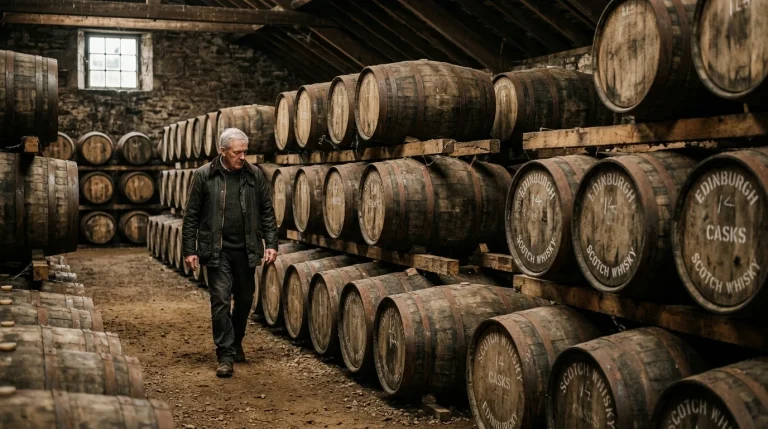
Once entered into oak containers (typically Quercus alba in the United States and Quercus robur in European sherry seasoning), maturation kinetics take over. Seasonal temperature fluctuations cause the wood porous structure to expand and contract, driving the spirit deep into the wood’s red layer. Heat degradation of lignin synthesizes vanillin, syringaldehyde, and guaiacol (smoky notes), while hemicellulose caramelizes into wood sugars, creating caramel, toffee, and toasted pastry aromas. The simultaneous evaporation of ethanol and water through barrel staves—revered as the Angel’s Share—concentrates the liquid, imparting depth, color, and viscous mouthfeel.
Copper acts as a chemical catalyst in pot and column stills by binding with volatile sulfur compounds (such as dimethyl trisulfide) produced during fermentation, precipitating them out as insoluble copper sulfate and preventing harsh rotten-egg notes in the spirit.
Charring American white oak barrels creates an internal layer of activated carbon that filters out residual congeners while thermally degrading wood lignins into vanillin and caramelizing hemicellulose into wood sugars that yield rich vanilla, caramel, and toffee tasting notes.
Pot stills operate in discrete batch cycles that retain a higher concentration of flavorful grain congeners and heavy esters, while continuous column stills utilize fractional reflux plates to run continuously, producing higher proof, lighter-bodied distillates with tighter purity tolerances.
The Lincoln County Process requires filtering newly distilled unaged whiskey through vats tightly packed with sugar maple charcoal prior to barrel aging, stripping away aggressive aldehydes and fatty acids to deliver a distinctive mellow, smooth finish.
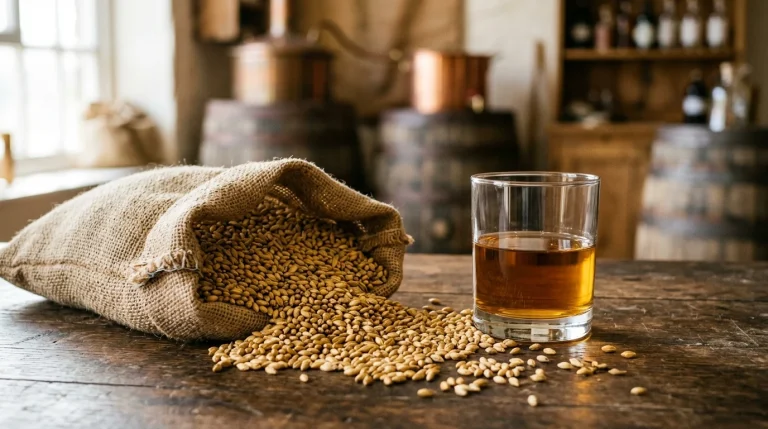
✨ This article was AI edited. Editorial responsibility: Armadillo Whiskeys. Purines in malt drinks are nitrogenous heterocyclic organic compounds…
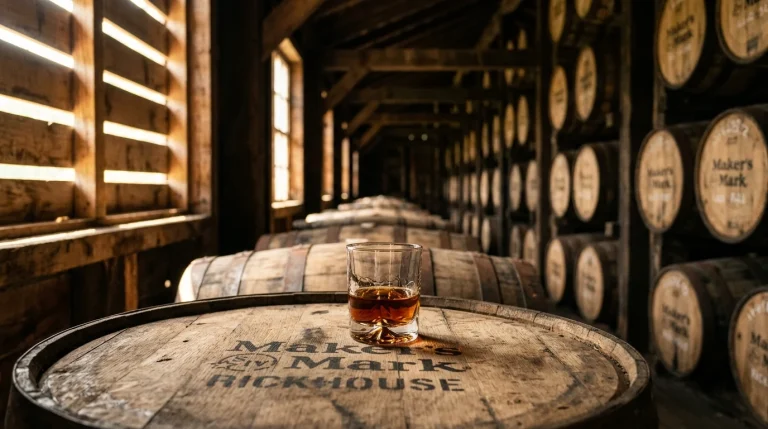
✨ This article was AI edited. Editorial responsibility: Armadillo Whiskeys. Maker’s Mark Kentucky Straight Bourbon is an iconic wheated…
✨ This article was AI edited. Editorial responsibility: Armadillo Whiskeys. Johnnie Walker Black Label is the benchmark 12-year-old blended…
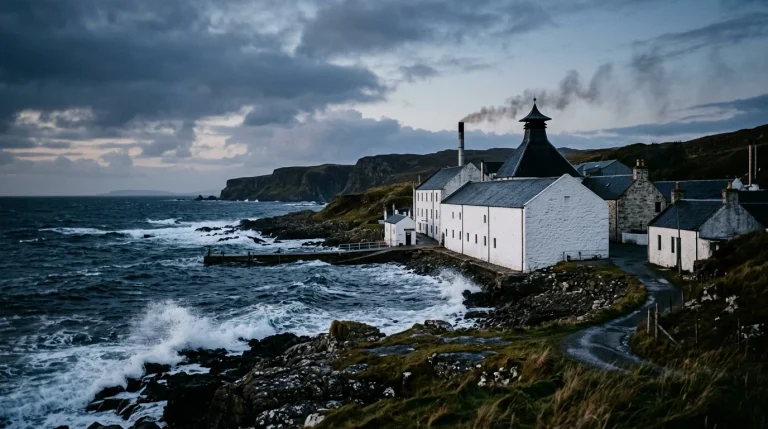
✨ This article was AI edited. Editorial responsibility: Armadillo Whiskeys. Laphroaig Single Malt Scotch Whisky is the iconic peated…
✨ This article was AI edited. Editorial responsibility: Armadillo Whiskeys. Diageo plc is the British multinational alcoholic beverage company…

When it comes to bourbon, two names reign supreme: Kirkland and Knob Creek. As a bourbon enthusiast, I’ve personally tasted both and can confidently say that the battle between these warehouse club favorites is a tough one. Kirkland offers a smooth and mellow flavor, while Knob Creek brings a rich and robust profile to the table. Ultimately, the choice boils down to personal preference. So whether you lean towards Kirkland’s subtle charm or Knob Creek’s boldness, you’re in for a satisfying sip either way.

As a whisky enthusiast, I have always been captivated by the refined taste and sophistication of Macallan 18. The sherry oak expression boasts a rich and robust character, while the double cask version offers a tantalizing combination of sherry and oak flavors. Both are stunning, but which will reign supreme in the battle of sherry elegance? Let’s uncork the bottles and find out.

Rye whiskey enthusiasts, listen up! Today, we embark on a thrilling journey through the realms of premium spirits, exploring…
Starting your own whiskey brand can be a thrilling and rewarding journey. As a whiskey aficionado, I always dreamt of creating my own signature blend. In this article, I will guide you through the ABCs of launching your own brand, from understanding the industry to crafting a unique identity that will make your whiskey stand out among the rest. So grab a glass, sit back, and let’s dive into the world of whiskey entrepreneurship.

When it comes to bourbon, two names stand out – Jim Beam and Woodford Reserve. Both distilleries have their unique charm and history, enticing whiskey connoisseurs worldwide. Jim Beam flaunts its legacy and affordability, while Woodford Reserve epitomizes sophistication and craftsmanship. Choosing between them is like picking between old friends – each with its distinct qualities, yet equally gratifying. So whether you prefer the boldness of Jim Beam or the refined elegance of Woodford Reserve, rest assured you’re in for a remarkable bourbon experience. Cheers to the best of both worlds!

When it comes to bourbon, Booker’s stands as a true standout. But let’s not forget the other gems in the bourbon library. From Basil Hayden’s smoothness to Knob Creek’s boldness, there are plenty of bourbons that will tantalize your taste buds. So grab a glass, explore the shelves, and sip your way through the rich flavors of these similar bourbons. Cheers!

When it comes to whiskey, Buffalo Trace and Uncle Nearest are like two heavyweight champions battling for the title of excellence. Both have a rich history, exquisite flavor profiles, and a loyal following. Whether you prefer the boldness of Buffalo Trace or the smoothness of Uncle Nearest, one thing is for certain – these titans of the whiskey world will always deliver an exceptional drinking experience. So, grab a glass, sit back, and let the clash of these whiskey giants unfold.

Hey whiskey enthusiasts! If you’re anything like me, you love a good whisky, and sometimes you’re up for an…

When it comes to Scotch blends, two names that often come up in conversations are Johnnie Walker Green Label and Glenlivet 15. Having personally explored both, I am confident in saying that they offer unique experiences. The Green Label impresses with its sophisticated mix of malts, while the Glenlivet 15 boasts a rich and smooth character. Both are worth exploring for any whisky enthusiast seeking a balanced and enjoyable Scotch experience.

As I took my first sip of Pendleton Whiskey, I couldn’t help but marvel at the craftsmanship behind its smooth and rich flavor. Curious to know more, I delved into the story behind the maker’s mark. From its humble beginnings in Oregon’s Pendleton Round-Up rodeo to its meticulous aging process, every aspect of Pendleton Whiskey reflects the passion and dedication of its makers. It’s no wonder it has become a favorite among whiskey enthusiasts worldwide. Join me as we uncover the fascinating secrets behind this exceptional spirit.

I recently had the pleasure of trying out the Jim Beam Devil’s Cut, and let me tell you, it was a devilishly good time. With its rich and robust flavor profile, this bourbon offers a unique and enjoyable drinking experience. The Devil’s Cut truly lives up to its name, with a devilishly smooth finish that will leave you wanting more. Whether you’re a bourbon enthusiast or just looking to try something new, I highly recommend giving Jim Beam Devil’s Cut a try. Cheers!

Hey there, fellow whiskey enthusiasts! Today, we’re diving into a fascinating topic that has sparked numerous debates around the…

When it comes to Tennessee whiskey, there’s no shortage of options on the market. But for those seeking a true taste of history, the choice often boils down to Jack Daniels Bonded or Old No. 7. Having explored both, I believe that the Bonded expression offers a bolder flavor profile due to its higher proof and stricter production guidelines. However, Old No. 7 maintains its iconic status as a classic and versatile choice. Ultimately, it’s up to personal preference – whether you prefer the intense complexity of Bonded or the timeless smoothness of Old No. 7, you’re guaranteed a sip of Tennessee tradition either way.

As a fervent lover of all things smoky and peaty, I recently found myself torn between two titans of Islay whiskies – Smokehead and Ardbeg 10. Both boast intense flavors and an unmistakable smoky character, but which reigns supreme? In this ultimate Islay smoke showdown, join me as I delve into the depths of these incredible whiskies, to determine once and for all, which one truly takes the crown.

Hey there, whiskey lovers and enthusiasts! Today, we embark on an exciting journey into the captivating world of whiskey…