Laphroaig Islay Single Malt Scotch: The Definitive Peated Whisky Guide
✨ This article was AI edited. Editorial responsibility: Armadillo Whiskeys.
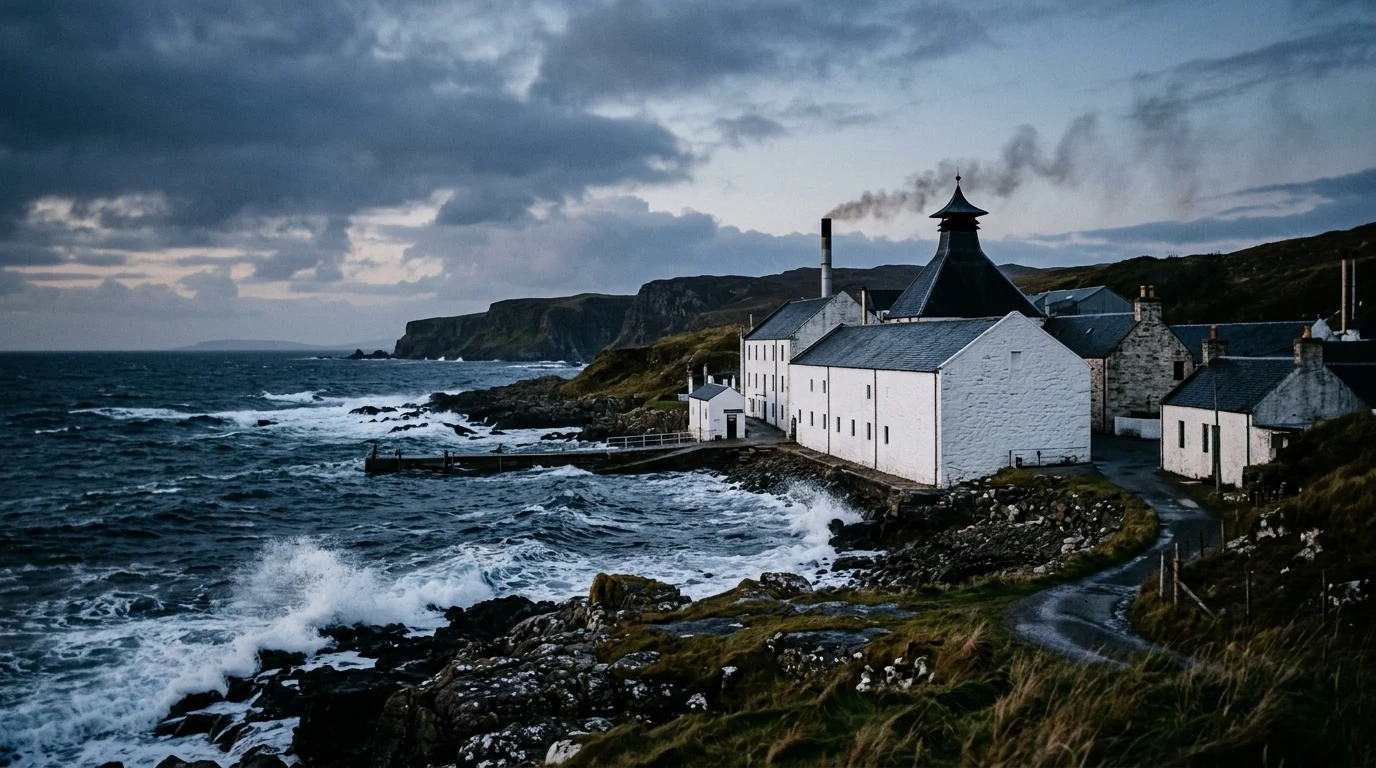
Laphroaig Single Malt Scotch Whisky is the iconic peated Islay single malt produced on the wave-battered southern coast of Islay, Scotland, founded in 1815 by Donald and Alexander Johnston. Famous worldwide for its distinctive medicinal character, intense maritime peat smoke, iodine, and salty seaweed (typically measured at 40–45 PPM phenols), Laphroaig is one of only a handful of Scottish distilleries that maintains its own active floor maltings and is the proud holder of a Royal Warrant personally awarded by King Charles III (as Prince of Wales).
The Unapologetic Identity of Laphroaig
Few single malt whiskies evoke as passionate a reaction as Laphroaig (pronounced la-FROYG, derived from the Scottish Gaelic meaning “the broad hollow by the bay”). Its bold, polarising character—famously embraced by the distillery’s “Opinions Welcome” advertising campaign—ranges from descriptors like medicinal, hospital gauze, TCP disinfectant, and damp bonfire ash to luscious honeyed vanilla, salted caramel, and tropical fruit compote. It is an uncompromised dram that defines the southern Islay peated whisky style alongside its neighbors Ardbeg and Lagavulin.
The foundation of Laphroaig’s cult status lies in its historical continuity, idiosyncratic production methods, and an unshakeable commitment to authentic craft. From cutting hand-harvested peat at the nearby Glenmachrie moss to kilning on historic wire-mesh drying floors, Laphroaig remains deeply rooted in island soil.
The Chemistry of Peat: Why Laphroaig Smells Medicinal
To understand Laphroaig’s unique flavor profile, one must deconstruct the organic chemistry of Islay peat. Unlike Highland or Speyside peat, which is formed largely from decomposed ancient forests of birch, pine, and heather, Islay peat is composed predominantly of sphagnum moss, sedges, and decaying marine vegetation accumulated over thousands of years:
Phenolic Composition (PPM)
Laphroaig peats its malt to approximately 40 to 45 parts per million (PPM) of total phenol compounds. However, PPM numbers alone do not dictate aroma. The specific chemical isomer balance in Laphroaig’s smoke includes:
- Cresols & Guaiacols: Imparting pungent medicinal, asphalt, iodine, and antiseptic notes reminiscent of vintage bandages and hospitals.
- Syringols: Contributing gentle sweet spice, clove, and vanilla undertones.
- Marine Esters: Formed by burning peat rich in seaweed and salt spray, yielding distinctive briny, marine top-notes.
Cold-Smoking Technique
During the kilning process, Laphroaig employs a deliberate “cold smoking” technique. Green malt is exposed to dense, low-temperature peat smoke for roughly 15 to 18 hours before hot air drying begins. This low-temperature exposure allows heavy phenolic molecules to adhere deeply to the damp barley husks without scorching the grain’s enzymatic potential.
Distillery Architecture and Craft Methods
1. Traditional Hand Floor Maltings
While over 90% of Scottish distilleries purchase commercially malted grain from industrial maltsters, Laphroaig produces approximately 15–20% of its malt in-house on two active malting floors. Distillers steep barley in peat-stained water from the Kilbride Dam, spread the moist grain across historic stone floors, and turn it every four hours by hand using wooden rakes (shiels) to control germination heat.
2. The Kilbride Stream Water
Water for mashing and cooling is drawn from the Kilbride Reservoir, flowing through thick beds of peat and heather before reaching the stillhouse. Soft, acidic, and distinctly amber-tinged, this water contributes mineral purity and subtle organic undertones to the fermentation wash.
3. Asymmetrical Copper Pot Stills
Laphroaig operates seven copper pot stills—three wash stills and four spirit stills. The spirit stills feature tall, narrow conical necks and distinctive flat-bottomed bases with steeply ascending lyne arms that force heavy condensation and reflux. Crucially, Laphroaig takes an exceptionally late cut of spirit during the second distillation, capturing heavy, long-chain phenolic compounds that other distilleries discard.
4. The Maker’s Mark Cask Heritage
In the mid-20th century, legendary distillery manager Ian Hunter pioneered the use of ex-bourbon barrels made of American white oak (Quercus alba). Hunter recognized that first-fill bourbon casks—specifically sourced from Maker’s Mark in Kentucky—provide the ideal balance of rich vanillin, toasted wood sugars, and coconut sweetness needed to soften the aggressive peat smoke without overpowering the spirit’s delicate citrus and green apple distillate esters.
Overview of Core Laphroaig Expressions
| Expression | ABV | Age Statement | Cask Formulation | Sensory Profile | Ideal Connoisseur |
|---|---|---|---|---|---|
| Laphroaig 10 Year Old | 40% / 43% | 10 Years | Ex-Bourbon Barrels | Medicinal smoke, seaweed, TCP, sweet vanilla, salty Atlantic tang. | Essential peat entry point; classic benchmark. |
| Laphroaig 10 Cask Strength | ~56–60% | 10 Years | First-fill Ex-Bourbon (Unchillfiltered) | Explosive bonfire smoke, charcoal, barbecue glaze, rich toffee, hot spices. | Purists seeking maximum peat concentration. |
| Laphroaig Quarter Cask | 48% | NAS (~5–8 Yrs) | Finished in 125L Quarter Casks | Toasted oak, coconut flakes, cinnamon spice, sweet cigar smoke. | Fans of bold oak extraction and higher proof. |
| Laphroaig Lore | 48% | NAS (7–21 Yrs) | Sherry Butts, Virgin Oak, First-fill Bourbon | Dark chocolate, dried fruit, rich peat, chili pepper, sweet maltiness. | Lovers of sherry-peat complexity and texture. |
| Laphroaig 16 Year Old | 48% | 16 Years | First-fill Ex-Bourbon Casks | Subdued peat smoke, roasted nuts, leather, beeswax, floral honey. | Refined palates appreciating mature, elegant peat. |
| Laphroaig 25 Year Old | ~51% | 25 Years | Second-fill Oloroso Sherry & Bourbon | Silky tropical mango, antique wood, gentle embers, candied ginger. | Collector luxury; pinnacle Islay maturity. |
In-Depth Review: Laphroaig 10 Year Old
The standard 10-year-old expression is the definitive starting point for understanding peated single malt Scotch whisky. Here is our deconstruction of its sensory profile:
Aroma (Nose)
The initial aroma leaps aggressively from the glass: medicinal iodine, sterile hospital gauze, burning driftwood, and damp peat embers. As the intense smoke settles, delicate undertones of lemon zest, green apple skin, and sweet American oak vanilla reveal themselves, supported by sea spray and wet coastal granite.
Palate
The entry is surprisingly sweet, with notes of vanilla cream, burnt marshmallow, and salted toffee coating the palate. Quickly, the signature peat wave hits: cracked black pepper, smoked kippers, diesel oil, and salty brine. The mouthfeel is medium-bodied with an oily texture that grips the tongue.
Finish
Remarkably long and warming. Tar, ash, and maritime salinity linger for minutes alongside a clean, citrusy drying sensation from the oak tannins.
Gastronomic Pairings & Tasting Advice
Because of its robust iodine and smoke profile, Laphroaig pairs brilliantly with intensely flavored foods:
- Fresh Islay Oysters: Pouring a teaspoon of Laphroaig 10 directly into a freshly shucked raw oyster shell elevates the natural salinity and bivalve sweetness.
- Smoked Blue Cheese: Stilton or Roquefort provides creamy lactic fat and pungent mold cultures that balance the dry ash and high phenol count.
- 70%+ Single-Origin Dark Chocolate: The bittersweet cocoa butter softens ethanol prickle and accentuates the underlying dried fruit and vanilla oak esters.
For more detailed comparisons with other Scotch titans, check out our in-depth analysis on unpeated Scotch whiskies, explore our breakdown of peated blends vs single malts, and discover our guide on collectible whiskies for investment.
Frequently Asked Questions
What does Laphroaig taste like?
Laphroaig is celebrated for its intense, uncompromising medicinal peat smoke, accompanied by notes of iodine, seaweed, salty sea air, charcoal, vanilla, and sweet citrus fruits.
How is Laphroaig pronounced?
Laphroaig is pronounced la-FROYG, with the accent placed on the second syllable.
Why does Laphroaig hold a Royal Warrant?
Laphroaig was granted the Royal Warrant by King Charles III in 1994 (when he was Prince of Wales). It is the only whisky distillery to bear his personal royal seal of appointment, as the 15-year-old (and later the 10-year-old) was his personal favorite single malt.
Is Laphroaig chill-filtered?
The standard Laphroaig 10 Year Old (at 40% or 43% ABV) is chill-filtered, while the 10 Year Old Cask Strength, Quarter Cask, Lore, and special Cairdeas festival bottlings are non-chill filtered to preserve natural oils and aromatic lipids.
Get our latest guides, news, and insights highlighted in your Google Search & AI Overviews.